



7 Sustainable Packaging Choices for Health Products That Actually Work

Last Updated: October 25, 2026
Quick Summary
Sustainable packaging health products balances environmental responsibility with product protection by using recyclable materials like recycled PET and HDPE plastics, glass, or bio-based options. The most effective choices account for functional requirements, transportation impact, and whether materials are actually accepted in local recycling systems.
- Glass is infinitely recyclable but 10-15 times heavier than plastic, increasing shipping emissions.
- Recycled PET (1) and HDPE (2) plastics are widely accepted in curbside recycling programs across North America.
- Refillable systems reduce packaging waste by one-fiftieth when a customer refills the same bottle 50 times.
- Packaging must meet FDA requirements to protect product integrity and prevent contamination or degradation.
- 74% of consumers consider sustainable attributes essential or nice to have when purchasing health products.
Table of Contents
- Why Sustainable Packaging for Health Products Matters
- Sustainable Supplement Packaging Materials: What Works Best
- Glass vs Plastic Supplement Bottles: Environmental and Functional Comparison
- Recyclable Vitamin Bottles: How to Choose and Use Them
- Refillable Supplement Packaging: A Circular Economy Approach
- Regulatory Requirements and Safety Standards
- Implementing Sustainable Packaging: A Practical Roadmap
- Finding Health Products with Genuinely Sustainable Packaging
- Frequently Asked Questions
Why Sustainable Packaging for Health Products Matters
Consumers increasingly expect sustainable packaging health products they buy to reflect their environmental values. When you choose sustainable packaging for health products, you're addressing a genuine market demand while reducing your environmental footprint.
The stakes are real. Research on sustainable food packaging regulations confirms that sustainable packaging can be enabled by bio-based and recyclable materials, yet most health product brands still rely on conventional plastics. This gap between consumer expectations and actual practice creates both a challenge and an opportunity.
Why does this matter for your buying decisions? Packaging waste from supplements and health products contributes meaningfully to landfill burden. Beyond that, the materials used, whether they protect your product effectively, whether they're truly recyclable, and whether they align with your values, shape your entire wellness experience. A supplement in compromised packaging loses potency. One in genuinely sustainable packaging delivers both efficacy and peace of mind.
Sustainable Supplement Packaging Materials: What Works Best
The most effective sustainable packaging for health products balances three competing demands: product protection, environmental responsibility, and cost viability. No single material wins across all three.
Bio-based and recyclable options
Bio-based materials derived from renewable sources offer genuine environmental advantages when they're also recyclable or compostable. These include plant-based plastics (PLA from corn), fiber-based materials, and certain resins engineered for end-of-life recovery. The appeal is clear: they reduce fossil fuel dependency and often carry lower carbon footprints than virgin plastics.
However, there's a critical constraint most guides overlook. Functional food packaging research emphasizes that packaging materials must withstand required processing and heat-treatment conditions to keep products safe. A bio-based plastic that degrades under standard storage temperatures or humidity is worse than conventional plastic, it fails at its primary job.
Trade-offs between protection and environmental impact
This is where sustainable packaging gets complicated. Glass offers excellent protection and infinite recyclability but carries significant weight, increasing shipping emissions. Recycled-content plastics reduce virgin material use but may compromise barrier properties against moisture or oxygen.
The honest truth: perfect sustainability doesn't exist. Your choice involves accepting trade-offs. A lightweight recycled-plastic bottle might have a lower overall carbon footprint than heavier glass, despite glass being infinitely recyclable. You can purchase refillable products that demonstrate this circular economy model.
Glass vs Plastic Supplement Bottles: Environmental and Functional Comparison
Glass and plastic represent the two dominant materials for supplement packaging, and they embody fundamentally different environmental and functional profiles.
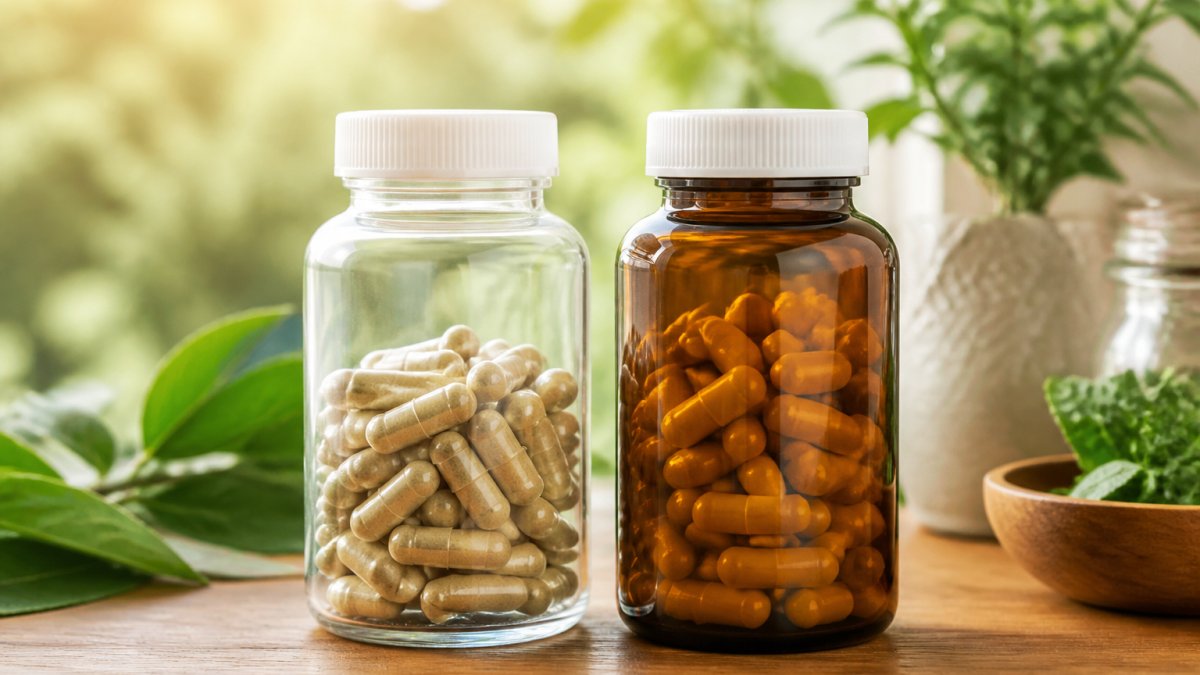
Glass is infinitely recyclable without degradation of material quality. A glass bottle recycled today can become a new glass bottle indefinitely. This closed-loop potential is its greatest strength.
The environmental cost arrives in weight and transportation. Glass bottles are 10-15 times heavier than equivalent plastic bottles, dramatically increasing shipping emissions, a hidden environmental impact most sustainability discussions ignore. Manufacturing glass also requires higher energy input than plastic molding.
Plastic bottles, particularly those made from recycled PET or HDPE, offer lighter weight and lower manufacturing energy. PET (polyethylene terephthalate, marked #1) and HDPE (high-density polyethylene, marked #2) are widely accepted in curbside recycling programs. The catch: recycling rates remain inconsistent.
For most supplement users, recycled-content plastic bottles represent a practical middle ground. See how safe, sustainable bottle packaging performs in real-world use. They're lighter (reducing shipping emissions), they're genuinely recyclable in most areas, and they adequately protect most formulations.
Glass and plastic each offer distinct environmental and functional advantages, with meaningful trade-offs to consider.
| Material | Key Strength | Primary Trade-off |
|---|---|---|
| Glass | Infinitely recyclable, superior barrier protection | 10-15 times heavier, higher manufacturing energy |
| Recycled PET (#1) | Lightweight, widely accepted in curbside recycling | Degrades with each cycle, not truly circular |
| Recycled HDPE (#2) | Lightweight, widely accepted in curbside recycling | Degrades with each cycle, not truly circular |
Recyclable Vitamin Bottles: How to Choose and Use Them
Not all packaging labeled "recyclable" actually gets recycled. Understanding what truly recyclable means, and how to dispose of it correctly, separates genuine sustainability from marketing.
Identifying truly recyclable packaging
Check the resin identification code on the bottom of the bottle. Codes #1 (PET) and #2 (HDPE) are accepted in virtually all curbside recycling programs across North America. Codes #3-#7 have limited acceptance and often end up in landfills despite the recyclable symbol.
Beyond the code, research your specific municipality's accepted materials. A bottle marked recyclable but not accepted in your area is functionally non-recyclable. Nourishing World recommends checking your local waste management website or calling your provider directly, it takes five minutes and eliminates guesswork.
Practical recycling instructions for consumers
Proper preparation dramatically improves the likelihood your bottle actually gets recycled rather than contaminating a batch and causing equipment shutdowns at the facility.
Empty the bottle completely and rinse it thoroughly. Residual supplement powder or liquid can contaminate recycling streams. Remove the cap, most caps are made from different plastic types and should go in trash or a separate cap-recycling program if available.
This matters because contamination is a real problem at recycling facilities. A single bottle with residual product can ruin an entire batch of recycled material.
Refillable Supplement Packaging: A Circular Economy Approach
Refillable systems represent the most environmentally efficient packaging model because they eliminate the need for repeated manufacturing and disposal cycles. A single glass or durable plastic container, refilled dozens of times, generates a fraction of the waste and emissions of single-use bottles.
The barrier to adoption is behavioral and logistical, not environmental. Customers must have convenient access to refill stations, trust that refilled products maintain quality, and accept slightly higher per-refill costs upfront. Brands must establish reliable supply chains and quality assurance for bulk products.
Where refillable systems work, typically in local or regional markets with established customer bases, the environmental gains are substantial. A customer refilling the same bottle 50 times generates one-fiftieth the packaging waste of single-use alternatives. For health products where repeated purchases are the norm (daily vitamins, routine supplements), refillable models align perfectly with actual usage patterns.
Nourishing World recognizes that refillable options work best when integrated into a broader sustainability strategy rather than as a standalone solution. Not every customer has access to refill infrastructure, and not every product format suits bulk refilling. The circular economy approach succeeds when it's genuinely convenient for the customer, not when it requires extra effort in the name of environmental virtue.
Regulatory Requirements and Safety Standards
Sustainable packaging health products cannot be assessed on environmental claims alone. Packaging must also protect the product and meet its functional requirements for safety and efficacy.
In the United States, the FDA regulates supplement packaging indirectly through requirements that packaging protect the product from contamination and degradation. The specific material matters less than whether it maintains product integrity through its shelf life. A compostable material that fails to protect vitamins from moisture is non-compliant, regardless of its environmental credentials.
Different product types have different requirements. Liquid supplements need moisture barriers that solid capsules don't. Heat-sensitive formulations require opaque or amber packaging. Probiotics need oxygen barriers to maintain viability. Sustainable packaging choices must satisfy these functional demands first. Environmental benefits come second.
Before selecting sustainable packaging, verify that your chosen material meets the specific stability and protection requirements for your product category. Consult with your supplier or a packaging engineer to confirm that environmental gains don't compromise product quality or regulatory compliance.
Implementing Sustainable Packaging: A Practical Roadmap
Moving from conventional to sustainable packaging requires a structured approach. This roadmap helps you navigate the transition without disrupting supply chains or compromising product quality.
Step 1: Audit your current packaging. Document the materials, weights, volumes, and costs of your existing packaging. Identify which products are most sensitive to material changes and which have flexibility. This baseline determines where sustainable alternatives are feasible.
Step 2: Define your sustainability priorities. Are you prioritizing reduced plastic use, increased recyclability, lower carbon footprint, or something else? Different goals lead to different material choices. A focus on reducing plastic might point toward glass or paper-based options.
Step 3: Evaluate alternatives against functional requirements. For each product, test sustainable packaging options to ensure they protect efficacy and meet regulatory standards. This step cannot be skipped. Environmental benefits mean nothing if the product degrades in transit or storage.
Step 4: Calculate total environmental impact. Use lifecycle assessment principles to compare options. Account for material extraction, manufacturing, transportation, use, and end-of-life. A heavier but infinitely recyclable material might have lower total impact than a lighter single-use alternative.
Step 5: Communicate transparently with customers. Explain your packaging choices, including trade-offs. Customers appreciate honesty about why you chose glass (protection and recyclability) or why you chose recycled plastic (weight and shipping emissions).
Finding Health Products with Genuinely Sustainable Packaging
When shopping for supplements and health products, genuine sustainability requires looking beyond marketing claims to actual material choices and end-of-life options.
Start by checking the packaging material. Look for resin codes #1 or #2 plastics (widely recyclable), glass (infinitely recyclable), or clearly labeled compostable materials with certification from recognized standards bodies. Avoid vague claims like "eco-friendly" or "green", these mean nothing without material specifics.
Research whether the company actually sources recycled content or uses virgin material. "Recyclable" means the material can theoretically be recycled; "recycled content" means it already contains material from previous products. The latter represents genuine circular economy progress.
Check if the company offers refill options or has a take-back program. These systems indicate real commitment to reducing packaging waste, not just marketing positioning.
For Nourishing World customers specifically, we prioritize packaging that protects product integrity while minimizing environmental impact. Our supplement bottles use recycled-content materials where functional requirements allow. We're transparent about trade-offs: some products require glass for protection, which increases shipping weight but ensures infinite recyclability.
The most sustainable packaging choice is the one that actually gets recycled or reused. Learn to identify clean label supplements with sustainable packaging to complete your buying decision.
Finding the right supplement packaging requires balancing environmental responsibility with product protection and practical end-of-life disposal.
Frequently Asked Questions
What is the most sustainable packaging for vitamins and supplements?
The most sustainable choice depends on your priorities. Glass offers excellent product protection and infinite recyclability but has a higher carbon footprint during transport. Recyclable PET and HDPE plastics reduce material use while remaining accessible. Refillable systems minimize overall packaging waste. Bio-based materials from renewable sources are emerging but must still meet safety standards. The best option balances environmental impact, product protection, and end-of-life disposal in your region.
Are glass supplement bottles more sustainable than plastic bottles?
Glass is infinitely recyclable and inert, protecting product quality indefinitely. However, its weight increases shipping emissions. Recyclable plastic bottles like PET and HDPE use less material and energy to transport but depend on recycling infrastructure. Neither is universally 'more sustainable', the answer depends on local recycling availability, transport distances, and your priority between product shelf life and carbon footprint. Refillable systems often outperform both in total environmental impact.
Can supplement packaging be recycled?
Most supplement bottles made from PET, HDPE, or glass are recyclable if your local program accepts them. Check the recycling symbol on the bottle (usually 1-7). However, caps, foam inserts, and desiccant packets often cannot be recycled together with the bottle and should be removed. Blister packs and foil are harder to recycle. Always verify your local recycling guidelines before placing packaging in the bin, as contamination can disrupt the entire recycling stream.
Are refillable supplement containers a good option?
Refillable systems reduce packaging waste significantly over time, especially for frequently purchased supplements. They work best when a reliable return or refill program exists nearby. Drawbacks include upfront costs, the need for consistent product availability, and potential moisture exposure if seals aren't airtight. For health products, the container must still meet safety standards and protect against light, moisture, and contamination. Refillable options are most practical for supplements you buy regularly.
