



Best Third-Party Tested Vitamins: How to Choose

Quick Summary
Third-party tested vitamins have been checked by an independent organization against a published standard, not just the manufacturer's word. To judge one, look for a named certifier, confirm the certification covers the specific product, and check the Supplement Facts panel for the exact form and dose.
- Third-party testing means an independent organization checks contents against a published standard.
- Testing can cover identity, potency, purity, and manufacturing, and a product may pass some checks but not others.
- Look for a named certifier rather than just a logo, and confirm the certification covers the product itself.
- A brand-level claim that its facility is certified is not the same as a product-level certification.
- Two bottles with the same label are not guaranteed to match, which is what independent testing aims to address.
Table of Contents
- Last Updated: November 5, 2026
- What Third-Party Testing Means for Vitamins
- How to Tell If Vitamins Are Good Quality
- NSF, USP, and Other Certifications Explained
- Best Third-Party Tested Vitamins from Nourishing World
- Best NSF-Certified Supplements: What to Look For
- Where to Find Third-Party-Tested Supplements Online
- Choosing Your First Tested Vitamin from Nourishing World
- Frequently Asked Questions
Last Updated: November 5, 2026
Last Updated: November 5, 2026
Nourishing World has put together this guide to help you tell which vitamins and supplements are genuinely third-party tested, and which only claim to be. Shoppers searching for the best third party tested vitamins often find a crowded market of seals, badges and "clean" labels, and the marketing rarely explains what any of them actually verify.
Start with the one thing a label cannot tell you on its own: whether an independent lab checked what is inside the bottle. That check is what separates a tested product from a well-designed label. The sections below explain what that testing covers, how to read the claims you see, and where the products in our range fit.
What Third-Party Testing Means for Vitamins
Third-party testing means an independent organization checks a product's contents against a published standard, rather than relying only on the manufacturer's own word. The testing body has no financial stake in the sale of the product, which is the entire point of the term.
Quality certification for dietary supplements is a structured area, and the regulatory framework is the starting point. Researchers writing in the Journal of the Academy of Nutrition and Dietetics describe how third-party certification organizations operate and which standards they follow (Quality Certification Programs for Dietary Supplements). Those standards are what give a seal its meaning.
Testing is not a single yes-or-no question. A certifier may check some of the following:
- Identity: whether the listed ingredient is actually present
- Potency: whether the dose on the label matches what the bottle contains
- Purity: whether contaminants such as heavy metals or microbes are below set limits
- Manufacturing: whether the facility follows recognized good manufacturing practices
A product can pass one of these checks and not the others, which is why the scope of a certification matters as much as its name.
How to Tell If Vitamins Are Good Quality
The most reliable way to judge a vitamin is to read the claim behind it. Start by asking what was tested, by whom, and against which standard. A vague phrase like "tested for quality" tells you almost nothing. A named certifier, a stated scope, and a way to look up the result tells you a great deal.
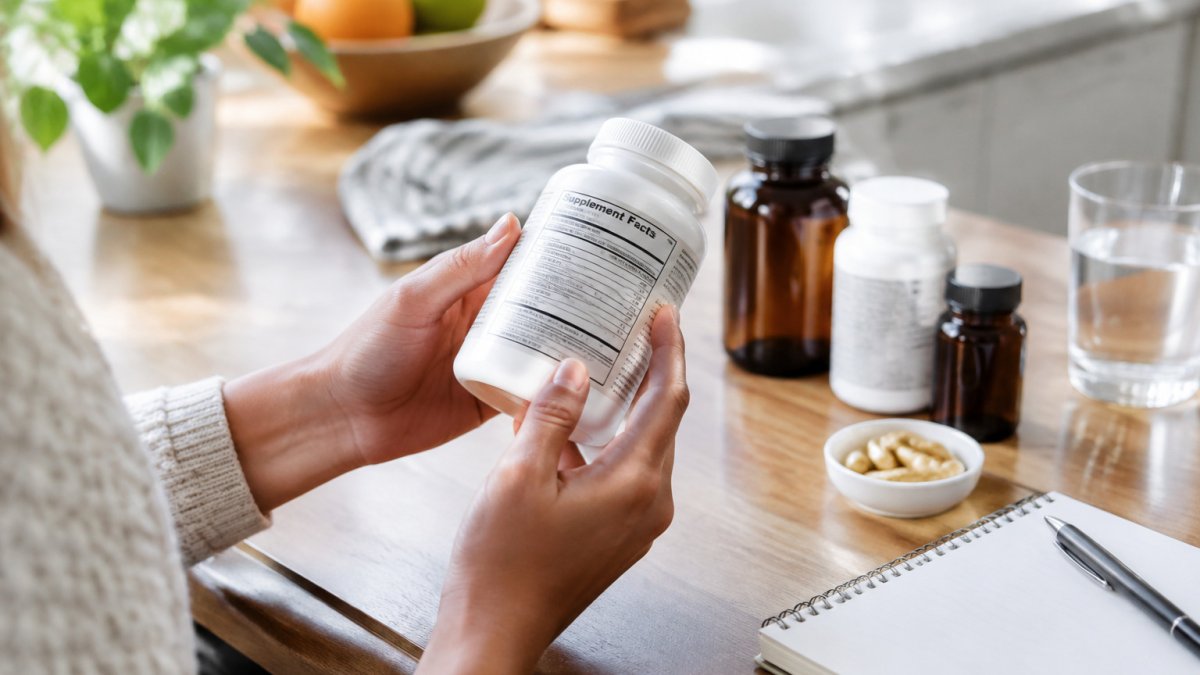
Research on supplement quality shows why this matters. A study screening duplicate bottles of 29 common herbal supplements examined consistency and contamination both within and between bottles of the same product (Screening for consistency and contamination within and between bottles of common herbal supplements). The lesson for shoppers is that two bottles with the same label are not guaranteed to match, which is the gap independent testing is designed to close.
Use these checks when you compare products:
- Look for a specific certifier's name, not just a logo.
- Confirm the certification covers the product itself, not only the brand's facility in general.
- Check the Supplement Facts panel for the exact form and dose.
- Note whether the claim is backed by a lot-level result or a general statement.
The checks below sum up how to judge a vitamin's testing claim before you buy.
| Check | What to look for | Why it matters |
|---|---|---|
| Certifier | A named organization, not just a logo | Shows who did the testing |
| Scope | Covers the product itself, not only the facility | Brand-level claims can hide gaps |
| Supplement Facts | Exact form and dose listed | Confirms what the bottle contains |
| Lot-level result | Specific result, not a general statement | Two bottles of one label may differ |
NSF, USP, and Other Certifications Explained
Several recognized programs verify supplements, and they do not all test the same things. The differences matter because a seal only tells you what its program was built to check. Below is a plain comparison of the programs shoppers are most likely to encounter, followed by the questions that separate a meaningful certification from a decorative badge.
NSF International (NSF Certified for Sport and NSF/ANSI 173). NSF describes its supplement work as conducting testing of dietary supplements rather than simply evaluating test data supplied by a manufacturer (NSF Dietary Supplement and Vitamin Certification). In practice, NSF/ANSI 173 covers label claims, contaminant limits, and facility good manufacturing practices, and NSF Certified for Sport adds screening for substances banned in sport.
USP (United States Pharmacopeia) Verified. A seal only tells you what its program was built to check, so look up a specific product in the certifier's own listing rather than relying on the logo alone.
What a certification does not establish. A certification confirms the criteria its program was built to check. It does not prove a vitamin works for a particular person, does not establish clinical effectiveness, and does not replace advice from a qualified healthcare professional. It also does not guarantee that every lot is identical unless the program includes ongoing lot-level testing, which is why the scope question below matters.
How to verify a specific product, step by step.
- Note the exact certifier name and program on the label (for example, "NSF/ANSI 173" rather than just "NSF").
- Look up the product, not just the brand, in the certifier's own online listing or database.
- Confirm the listing matches the exact product form and size you are buying, since certifications can apply to one SKU and not its siblings.
- Check what the program tests: identity, potency, contaminants, manufacturing practices, or banned substances.
- Note whether the program includes ongoing lot testing or a one-time review.
Watch out: a brand-level certification statement ("our facility is NSF certified") is not the same as a product-level certification, and marketing pages often blur the two.
Certification vs. testing vs. a brand's own claims. These are three different things. A certification is a third party's ongoing verification against a published standard. Testing can be a one-time lab check a brand commissions without any certification. A brand's own quality claim ("pure," "premium," "clinically tested") is marketing language unless a named third party and a verifiable result stand behind it. When you compare products, ask which of the three you are actually looking at.
Best Third-Party Tested Vitamins from Nourishing World
Most roundups of third-party tested vitamins stop at brand-level claims. This section takes the gap competitors leave open: a product-level view of what each option is, what its testing claim actually covers, and what you can verify before buying. Each entry below is described using the details on its product page, and where the testing description is general rather than lot-specific, that is stated plainly so you can weigh it.
How to read the comparison
For each product, four things matter: the nutrient and form, the dose per serving, the testing claim as written, and whether that claim is product-specific or brand-level. A product can be a good fit even when its testing description is general, but you should know which kind of claim you are relying on.
Vitamin D3 and multi-nutrient options
Perfect D3 Drops. A liquid vitamin D3 product delivering 1,000 IU per drop, suspended in organic MCT oil. The product listing states it is third-party tested and free of GMOs, glyphosate, heavy metals, gluten, and allergens.
Catie's Whole Food B-Complex. A B-complex built from whole-food sources, available in capsule and powder forms. The listing describes it as non-GMO and free of artificial additives.
Cod liver oil and omega-3 options
Cod liver oil is a category where sourcing and processing vary widely, so the product details carry more weight than the category name.
Green Pasture Fermented Cod Liver Oil. Produced through traditional fermentation. The product listing describes third-party lab testing. You can also compare the butter oil and cod liver oil blend options from this brand.

Rosita Extra-Virgin Cod Liver Oil. Offered in both liquid and softgel form. The listing notes third-party testing for purity and heavy metals.
Dropi Cod Liver Oil Capsules. A softgel option at 500 mg per capsule. The listing describes third-party testing for purity.
What this comparison does and does not tell you
This is a product-level view of testing claims as described on each listing, not an independent lab report. Where the description is general, treat it as a brand claim until you confirm otherwise.
Best NSF-Certified Supplements: What to Look For
When a product carries an NSF mark, check the certification's actual scope. Look for the certifier's name, confirm that the mark applies to the specific product and not just the company, and review what the program tests.
Do not assume that every seal means the same thing. Some programs focus on contaminants, others on label accuracy, and others on manufacturing practices. The question to ask is always what was checked, not just whether a badge is present.
Also consider the form. A certified vitamin in a form your body handles poorly may still disappoint, so read the Supplement Facts panel for the specific ingredient and dose.
Where to Find Third-Party-Tested Supplements Online
Start with the manufacturer's product page and look for a specific claim about independent testing, then confirm that claim against the certifier's own listing or the lot documentation the brand publishes. A reputable seller will name the lab or program and tell you what it covered.
Be cautious with generic phrases such as "clinically tested" or "premium quality" when no testing body is named. They are marketing language, not verification. Compare product pages side by side and note which ones give you a verifiable source you can check yourself.
Within our own range, each product page lists its testing and ingredient details, so you can compare them directly rather than relying on a single headline claim.
Choosing Your First Tested Vitamin from Nourishing World
If you are starting out, pick one clear need first, such as daily vitamin D or omega-3 support, rather than buying across several categories at once. That makes it easier to judge a single product's testing claims and see how it fits your routine.
For a straightforward first purchase, Perfect D3 Drops offer a simple formula. Check the testing details on the product page, read the dose, and confirm it suits your needs before ordering.

Nourishing World's range is built around clean-label, transparently described products. Read each listing closely, compare the testing claims, and choose the option whose verification you can actually confirm.
Disclaimer: These statements have not been evaluated by the Food and Drug Administration. This article is for general information and is not intended to diagnose, treat, cure, or prevent any disease. Consult a healthcare professional before starting any supplement.
Frequently Asked Questions
What is the most reliable third-party testing for supplements?
The most recognized programs are NSF International and USP Verified. Both use independent laboratories to check that a product contains the ingredients and amounts listed on its label, and that it is free of specified contaminants. Each program publishes its scope, so check which attributes a given certification covers. Third-party testing confirms a product matches its label, but it does not by itself prove a supplement improves health. Compare certification claims against the certifier's stated standards before relying on them.
How can you tell if vitamins are third-party tested?
Look for a certification seal from an independent organization such as NSF or USP on the packaging. You can also check the certifier's online database, which lists certified products by name and manufacturer. Be cautious of vague phrases like 'quality tested' or 'lab tested' without a named independent program, since those can refer to the brand's own internal testing. A verified seal should reference a specific product and can be looked up independently.
Does third-party testing guarantee that a vitamin is safe or effective?
No. Third-party testing checks identity, potency, and purity against the label and against defined contaminant limits. It does not evaluate whether a vitamin will produce a health benefit for you, and it does not replace advice from a healthcare provider. Certification scope varies, so a seal may cover heavy metals but not every possible contaminant. Use testing as one part of your selection, alongside clear labeling and an honest assessment of your own needs.
